
WHAT CHANGES WITHOUT LEAVING
23 OCTOBER - 27 NOVEMBER 2026
OPENING RECEPTION FRIDAY · 23 OCTOBER · 5-8 PM
826 CANYON ROAD SANTA FE
ARID ECHOES · PREVIEW RECEPTION THURSDAY 22 OCTOBER · 6–8 PM COCKTAILS · HORS D'OEUVRES · MUSIC WITH ERIN MCGUINESS
SANTA FE TEAHOUSE · 821 CANYON ROAD · $60 PER PERSON
Ceramic sculptures by Erin McGuiness | Paintings by Josefin Tolstoy
A place may remain with us long after we leave it. So may a gesture repeated over years, an object we have kept, or a feeling whose meaning changes with time. What Changes Without Leaving brings together ceramic sculpture by Erin McGuiness and painting by Josefin Tolstoy. Through different materials and experiences, both artists consider how what endures within us continues to shape who we become.
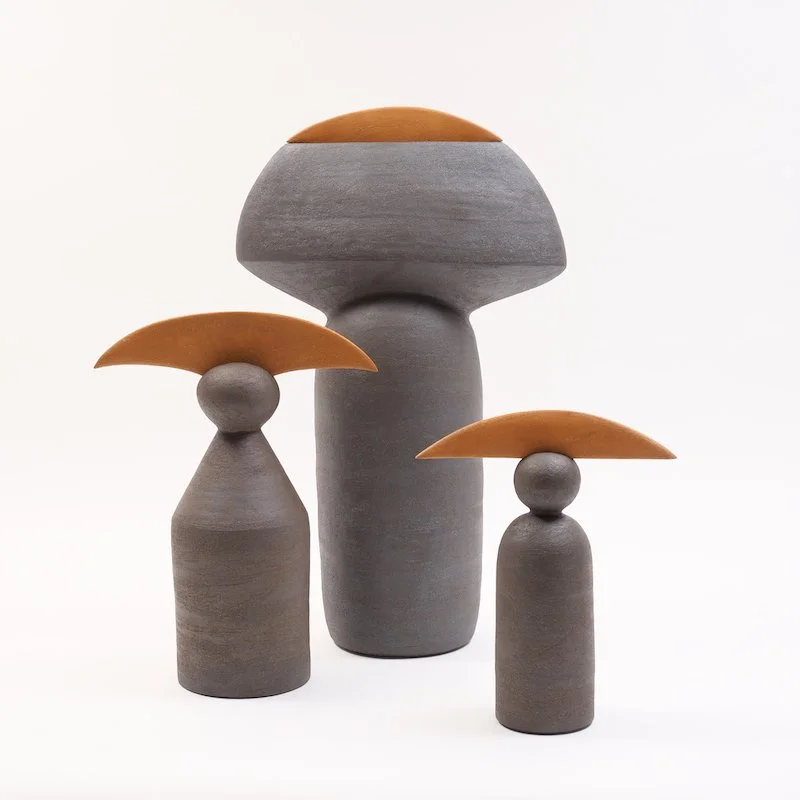
McGuiness’s She Who Abides in the Night grew from time spent in the New Mexico high desert. Beneath a vast night sky, surrounded by mountains and darkness, she felt a lonesomeness rise and found it witnessed by the landscape. In making the work, she returned to that experience through clay, allowing its emotional presence to guide the forms.
The sculptures’ dark surfaces retain the touch of her hand. Curved walls surround openings that suggest crescent and half moons; small perforations allow light to pass through. Some forms rise in narrow blades, while others sit close to the ground or gather together like a distant mountain range. Darkness remains present throughout the work, even where light enters it. The two exist together, much as the feeling that began the work remains part of the change it set in motion.
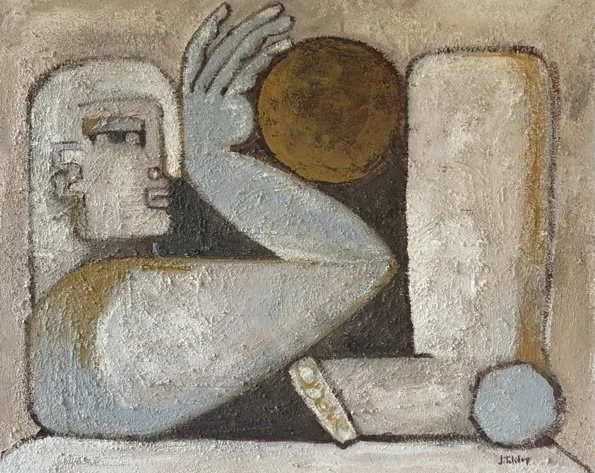
Tolstoy’s What We Hold considers a different kind of continuity. Across time, people have gathered objects, repeated ordinary acts and built rituals that give shape to their lives. Her paintings bring these impulses into view through figures that lean toward one another, fold around familiar forms or appear enclosed within them. Layers of pigment and textured material accumulate on the surface, allowing traces of the painting’s development to remain visible.
The closeness in Tolstoy’s work is rarely simple. The figures and forms suggest intimacy, but also the boundaries that grow around what we value and seek to preserve. What offers reassurance may, over time, begin to feel restrictive. Her paintings leave that relationship open, inviting us to consider how our attachments change even as they remain part of us.
McGuiness and Tolstoy approach these questions from distinct directions: one through an encounter with the desert at night, the other through the figures and rituals of everyday life. Seen together, their works resist the idea that change requires a clean departure from what came before. Some experiences remain with us. What changes is how we see them, and how we live in their presence.
RSVP